Pinkston’s Site User Safety Bulletin 2026
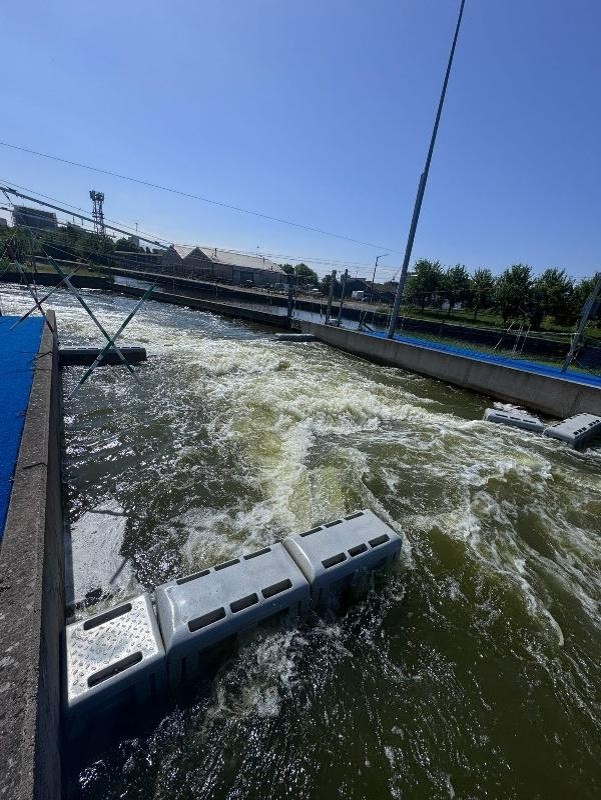
New course modifications: We have been working on the final straight of the course and the outflow of the artificial white watercourse (AWWC). The old river right eddy at the outflow was causing problems for site users due to the strong eddy line and recirculation.
We have changed the configuration of blocks along the back straight which has created new features, and in my opinion, a more accessible outflow. Make sure to have a wee look before getting on and please feedback on any issues or concerns about the new configuration and we will try our very best to accommodate.
Risk Assessments: This is a gentle reminder to continually review and update risk assessments to match the activities/training you are providing for your club/organisation. As paddling disciplines are progressing, it is important to review any new hazards that paddlers and general public are exposed to and implement control measures to reduce these.
Busy centre – clear decking: 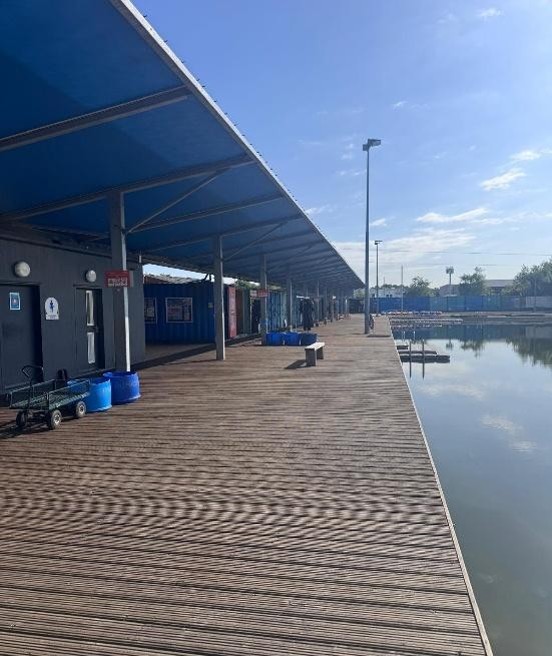
As we approach our busy summer season, can all site users please try their best to keep the decking as clear as possible, allowing people to walk up and down freely away from the edge.
UHI research survey: Pinkston is currently involved in a research project with the
Institute of Outdoor Learning, University of Highland and Islands and Collective Knowledge. This is a participation and incident snapshot survey that aims to identify accident/incident trends across the industry. Please make sure to report any incidents that happen on sight to your own organisation/club but also to us. This allows us to identify any trends but also pass on relevant data to this countrywide research project.
Floatation station – Up and running 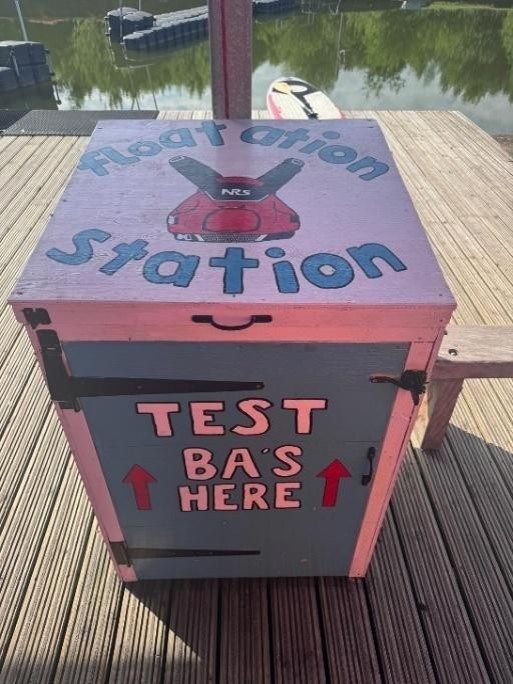
Some of you may have noticed our floatation station has had an upgrade. Please feel free to use it to test the floatation standard of your buoyancy aids. We have digital scales, weights, the formula and national floatation standards available in the office. We have recently linked up with NRS and they have sent us a range of buoyancy aids for participants to borrow if their buoyancy aid fails. Please catch us in the office if you need to borrow one for your session.
Some wise words from Dougie – Buoyancy Aids
In the last safety bulletin, we looked at white water boats, fitting them out and how to keep them afloat. As we all know (at least I do), we sometimes need to rely on our buoyancy aid to float rather than our kayak. Swimming in white water is a big subject and therefore maybe one for the next bulletin. For now, let’s have a think about our buoyancy aids.
Buoyancy aids and life jackets come in four different categories 50N (a buoyancy aid), 100N, 150N and 275N (Life Jackets). The floatation category is a bit misleading, as some small 50N BA’s won’t have 50N of uplift and some large ones will have much more. Almost all white water BA’s are in the 50N category. As you will have seen at Pinkston and elsewhere in this newsletter, we have installed a testing station so that you can test your own or your clubs BA’s to ensure they have sufficient floatation for their size and use. It is important to test them as they diminish over time. We have seen well used BA’s fail floatation tests within five years and I have certainly seen some 20-yearold ones that are probably not even keeping you warm while walking about on the shore. Picture them as bubble wrap, every time you bend it, sit on it or squeeze it in your bag, some of those bubbles burst. I would recommend testing annually for personal use BA’s. If you keep a note of the reading, you will see the downward trend, and it will let you predict when a new one is going to be required. If your BA fails and you want to go paddling that night, good news, NRS have given us some BA’s you can borrow for the night.
What else do we need to know about our BA’s other than how much they float? Fit is important! Some manufacturers suit long bodies and others better suit short ones. A comfortable fit is important. It should fit snuggly enough that if you take a swim, you don’t find the BA floating, but you falling out the bottom of it. Neither do you want one that is so tight that you are limited in freedom of movement. If your BA is at full stretch when you put it on, it is probably too small and will have insufficient buoyancy for you. You need to reduce your pie intake for a while or replace the BA.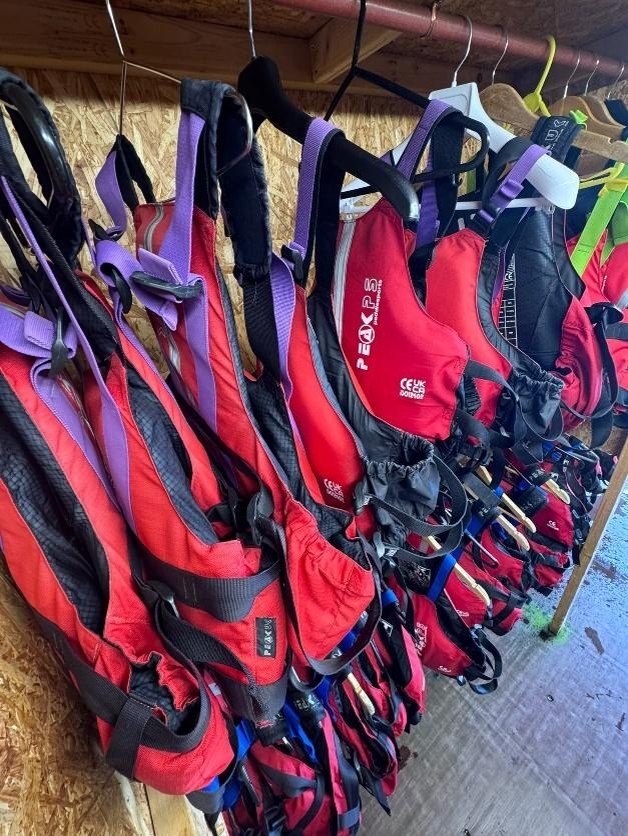
Importantly, 50N BA’s are designed to assist someone who can swim, they will not turn a person from upside down to upright without action from the swimmer. We have experience of this at Pinkston even when the swimmer is conscious. From what we can tell, it is swimmers with low confidence and low experience of cold outdoor water. Please keep a special eye on any club members in this category and if you don’t know for sure that they can right themselves and get their airway above the water without assistance, assume that this is the case and monitor them closely on the flat water or white water course. Being on our own when relying on a 50N BA has some extra risks as they are designed for use when help “is close at hand”. We are not fans of “must do” or “must not do” safety rules, but please be aware of this if you are on your own, or out of sight of others while boating.
One last thing, chest harnesses. A topic on its own, but here are some quick points. Follow the manufacturers’ guidance for fastening the buckle. They vary, and in some circumstances vary depending on the setting (live bait deployment or land-based belay). Chest harnesses are not designed for lowers or abseils on steep ground. The chest harnesses should not be used to make the BA fit you snuggly; the BA fittings should be used for that. Lastly, attaching to the harness requires some training and practice as there are options and a lot of easy mistakes that can be made. Attaching incorrectly can be dangerous. Use locking gate carabiners, they reduce the likelihood of clipping malfunction.
As I write this, I wonder if there is value in delivering a session on the WW course hanging on chest harnesses? If you think that is worthwhile let us know. Safe paddling out there.
Dougie and Niamh.